Restaurant Menu Design: How to Build a Menu That Works for Customers and Your Business
What makes a restaurant menu work? Explore how dish selection, pricing, descriptions, layout and kitchen operations influence customer decisions and profitability.
By Lee Mokonyane · 10 October 2026 · 10 min read
A restaurant can serve excellent food and still struggle with its menu.
A popular dish may contribute very little towards operating costs. Ingredients may spoil because they appear in only one recipe. Customers might overlook profitable dishes or struggle to understand what they are ordering.
These problems often begin before the menu reaches the designer.
Menu design influences what customers choose, what the kitchen can produce consistently, how ingredients are purchased and how much each sale contributes to the business.
The starting point is understanding which dishes deserve to be there.
Start With the Restaurant, Not the Layout
A menu should reflect the restaurant’s customers, service style and kitchen capacity.
A neighbourhood café, steakhouse and fine-dining restaurant have different requirements. Customers visit for different reasons, expect different levels of service and have different expectations about price and choice.
Before developing the menu, establish:
- who the restaurant serves and what customers expect
- which dishes the kitchen can prepare consistently
- how much preparation and equipment each dish requires
- what ingredients are reliably available
- which dishes sell and what they contribute financially
- how the menu will accommodate dietary requirements
A dish may perform beautifully during development but become difficult to reproduce during a busy service.
If it requires equipment already occupied by other dishes or extensive last-minute preparation, the kitchen may struggle to deliver it consistently.
These operational limitations should influence menu decisions before design begins.
Cost and Evaluate Every Dish
A dish that sells frequently is not necessarily profitable.
Two useful measures are popularity, or how often customers order a dish, and contribution margin, the amount remaining after its direct variable costs are deducted from the selling price.
For a simplified food-cost calculation, consider a main course selling for R180:
- selling price: R180
- ingredient cost: R55
- contribution after ingredient cost: R125
- food-cost percentage: approximately 30.6%
The R125 is not net profit. The restaurant still needs to cover labour, rent, electricity, cleaning, payment fees and other operating expenses.
Now consider another dish selling for R120 with an ingredient cost of R30.
Its food-cost percentage is lower at 25%, but it contributes only R90 after ingredient cost.
The first dish contributes R35 more per sale, despite having a higher food-cost percentage.
This is why percentage alone can be misleading.
Understand the real ingredient cost
Recipe costing should account for trimming losses, cooking yields, sauces, garnishes and accompaniments.
A 200 g portion of cooked meat may require considerably more than 200 g of raw meat. A whole fish and a prepared fillet also have different usable yields.
Standardised recipes and portion sizes make costing more reliable and help the kitchen maintain consistency.

Use menu engineering to identify opportunities
Traditional menu engineering groups dishes according to popularity and contribution:
- Stars: High popularity and high contribution. Maintain their quality, availability and visibility.
- Plowhorses: High popularity but low contribution. Review ingredient costs, portions and pricing.
- Puzzles: Low popularity but high contribution. Investigate whether customers notice, understand or want them.
- Dogs: Low popularity and low contribution. Consider removal unless they serve another valuable purpose.
These categories help identify where to investigate. They should not dictate decisions automatically.
A low-selling dish may be important to the restaurant’s identity or serve a dietary requirement. A profitable dish may create excessive preparation work.
Review sales alongside waste, labour requirements, customer feedback and service performance.
Decide What Deserves a Place on the Menu
Every dish creates work beyond its recipe.
It requires purchasing, storage, preparation, equipment, staff knowledge and cleaning.
Imagine a seafood pasta that sells twice a week. If its seafood is used nowhere else, the restaurant may need to purchase small quantities at higher prices or risk stock spoiling before it can be sold.
Its actual contribution may be lower than the recipe costing suggests.
A useful question is:
If we removed this dish tomorrow, what would become easier?
Perhaps the kitchen would need fewer ingredients, less preparation or one fewer cooking process during service.
More choice is not always useful
There is no scientifically established number of dishes that every restaurant should offer.
Research on choice overload suggests that difficulty choosing depends on how options differ, how they are presented and how familiar customers are with them.
A menu with 25 distinct dishes may be easier to navigate than one with 12 dishes that sound almost identical.
Each option should provide a meaningful reason to choose it.
Six chicken dishes with slightly different sauces may add complexity without offering much variety.
Use ingredients intelligently
Ingredient overlap can improve purchasing efficiency and reduce waste.
Roasted peppers, for example, might appear in a starter, sandwich and pasta dish.
That can improve stock turnover, provided the ingredient makes culinary sense in each preparation.
Seasonality offers similar opportunities. A restaurant can maintain a reliable core menu while changing vegetables, fruit, garnishes, desserts and specials according to availability.
Seasonal ingredients are not guaranteed to be cheaper, so purchasing decisions should still reflect actual prices and supply.
Related reading: Seasonal Ingredients in South Africa: What to Buy and When
Make the Menu Easy to Navigate
Customers should be able to find what they want without studying the page.
Organise dishes according to how people order.
A café might use breakfast, sandwiches, larger plates and bakery items. A steakhouse may benefit from starters, cuts, sides and desserts.
Keep related dishes together, use clear headings and make prices easy to find.
Does menu placement influence choice?
Visual attention can influence what customers notice, but popular menu-design rules are often overstated.
The so-called golden triangle claims customers look first at the centre of a menu, then the top right and finally the top left.
Eye-tracking research has challenged the idea that customers follow one universal scanning pattern.
How people read a menu depends on its layout, format and content.
Use visual emphasis where it helps customers identify something relevant, such as a signature dish, seasonal special or sharing option.
Spacing, typography and restrained highlighting can improve readability.
Avoid designing the entire menu around an assumed psychological shortcut.
The same caution applies to claims that removing currency symbols automatically makes customers spend more. Research into price presentation is context-dependent.
Choose a price format that is clear, consistent and appropriate to the restaurant.
Write Descriptions That Help Customers Choose
A dish name should identify the food. Its description should provide enough information for customers to understand what they will receive.
For example:
Roast Chicken Lemon-roasted chicken, crushed baby potatoes, charred greens and chicken jus.
The description communicates the preparation and accompaniments without becoming a paragraph.
Useful details include the main ingredient, cooking method, important accompaniments, flavour and texture.
Words such as crispy, smoked, charred, pickled and slow-roasted communicate something meaningful.
Words such as delicious, amazing and mouth-watering provide little information.
Compare:
Delicious Homemade Chicken Burger
with:
Crispy Chicken Burger Buttermilk-fried chicken, cabbage slaw, pickled cucumber and chilli mayonnaise.
The second description gives customers a clearer expectation of the food.
Cultural dish names should also be preserved where appropriate. A dish such as bobotie, shakshuka or bibimbap can retain its name while the description explains unfamiliar ingredients or preparation.
Descriptions should be accurate, concise and consistent with what the kitchen serves.
Communicate Dietary Requirements Accurately
Customers should be able to identify suitable options without repeatedly questioning staff.
Clearly marked vegetarian, vegan or gluten-free dishes can help, provided those labels are accurate.
Allergen information requires particular care.
A dish without nuts as an ingredient may still be unsuitable for someone with a severe nut allergy if cross-contact occurs during preparation.
Removing cheese does not necessarily make a dish vegan if its sauce contains butter.
The kitchen and service team should understand ingredients, preparation methods and the limitations of any dietary claims.
South Africa’s R146 food-labelling regulations address packaged foods and should not be presented as directly governing every restaurant menu. The broader principle remains relevant: food information must be accurate and support safe decisions.
Dietary categories should not be treated as nutritional claims. Vegan, gluten-free and low-carbohydrate foods vary considerably in nutritional composition.
Use Photography and Digital Menus Where They Help
Photography can be useful when customers are unfamiliar with dishes, appearance influences ordering or customers need to understand portion sizes and customisation options.
This is particularly relevant to some takeaway and digital-ordering menus.
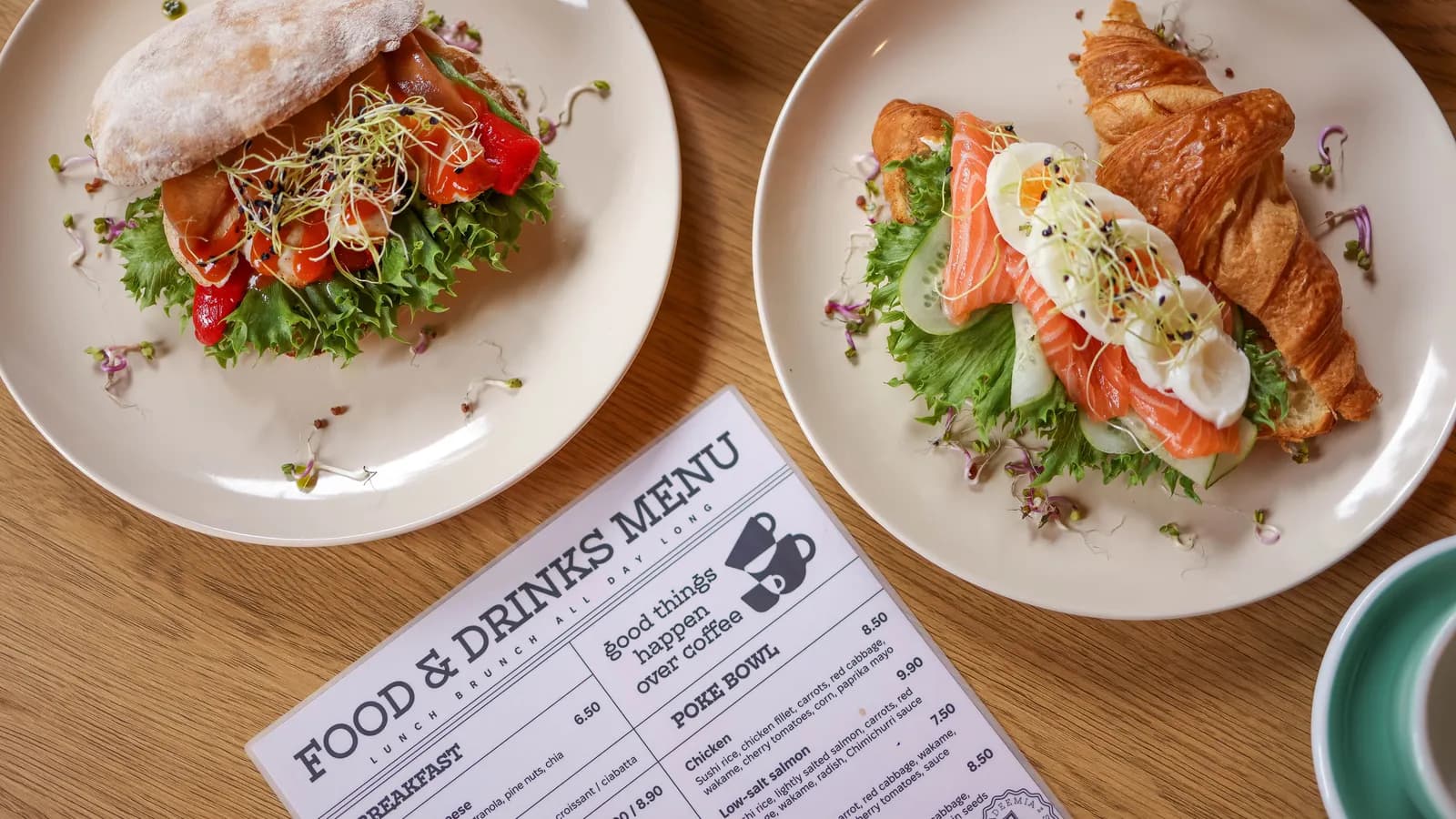
Images must accurately represent what customers receive. A generously filled sandwich in a photograph creates an expectation the kitchen needs to meet.
Poor photography can also weaken perceived quality.
Digital menus offer practical advantages, including easier price changes, updated availability, seasonal additions and more detailed dietary information.
However, customers should not have to navigate several pages or repeatedly zoom into a poorly formatted PDF to find a main course.
A usable digital menu needs:
- readable text on mobile devices
- clear categories and prices
- straightforward navigation
- fast loading
- accessible dietary information
Consider keeping physical menus available for customers who need or prefer them.
Choose the format that makes ordering easier.
Test, Measure and Improve the Menu
Before publishing a menu, ask someone unfamiliar with it to find a vegetarian main, the least expensive main course, a dessert and a particular drink.
Can they identify what comes with each dish? Are prices clear? Which descriptions require explanation?
Then test the menu in the kitchen.
A dish may appear straightforward on paper but become difficult when several customers order it simultaneously.
A trial service can reveal problems with preparation time, equipment, plating and portion consistency.
Review what happens after launch
Once customers begin ordering, evaluate:
- sales volume and contribution margin
- ingredient waste and stock-outs
- preparation time and service delays
- customer questions and complaints
- returned dishes
- changes in purchasing costs
Use the findings to adjust dishes, prices, descriptions or preparation methods.
Where possible, change one major variable at a time so you can understand its effect.
A menu with low-selling dishes does not automatically need a redesign. Some dishes need clearer descriptions, others need operational changes, and some no longer deserve their place.
What Makes a Menu Work?
A good menu gives customers clear choices, allows the kitchen to deliver consistently and supports the restaurant’s financial performance.
That requires decisions about which dishes to offer, what they cost, how they are prepared and how customers understand them.
The most useful test is whether every dish earns its place through customer demand, commercial contribution or a clear role in the restaurant’s offering.
Good menu design makes those decisions easier to communicate and act on.
Research and further reading
1. Eating with the Eyes? Tracking Food Choice in Restaurant’s Menu
- Food Quality and Preference, 2023. Examines visual attention and food choices when customers read restaurant menus.
2. Eye Movements on Restaurant Menus: A Revisitation on Gaze Motion and Consumer Scanpaths
- International Journal of Hospitality Management, 2012. Investigates menu scanning patterns and challenges the commonly cited golden triangle.
3. The Effect of Menu Design on Consumer Behavior: A Meta-Analysis
- International Journal of Hospitality Management, 2023. Synthesises 53 studies examining how different menu-design elements affect consumer behaviour.
4. Is Menu Design Effective? A P-Curving Analysis
- International Journal of Hospitality Management, 2023. Examines the strength of published evidence on menu-design effects.
5. Regulations Relating to the Labelling and Advertising of Foodstuffs (R146)
- South African National Department of Health. Official regulatory text covering packaged-food labelling, including allergen-related requirements.