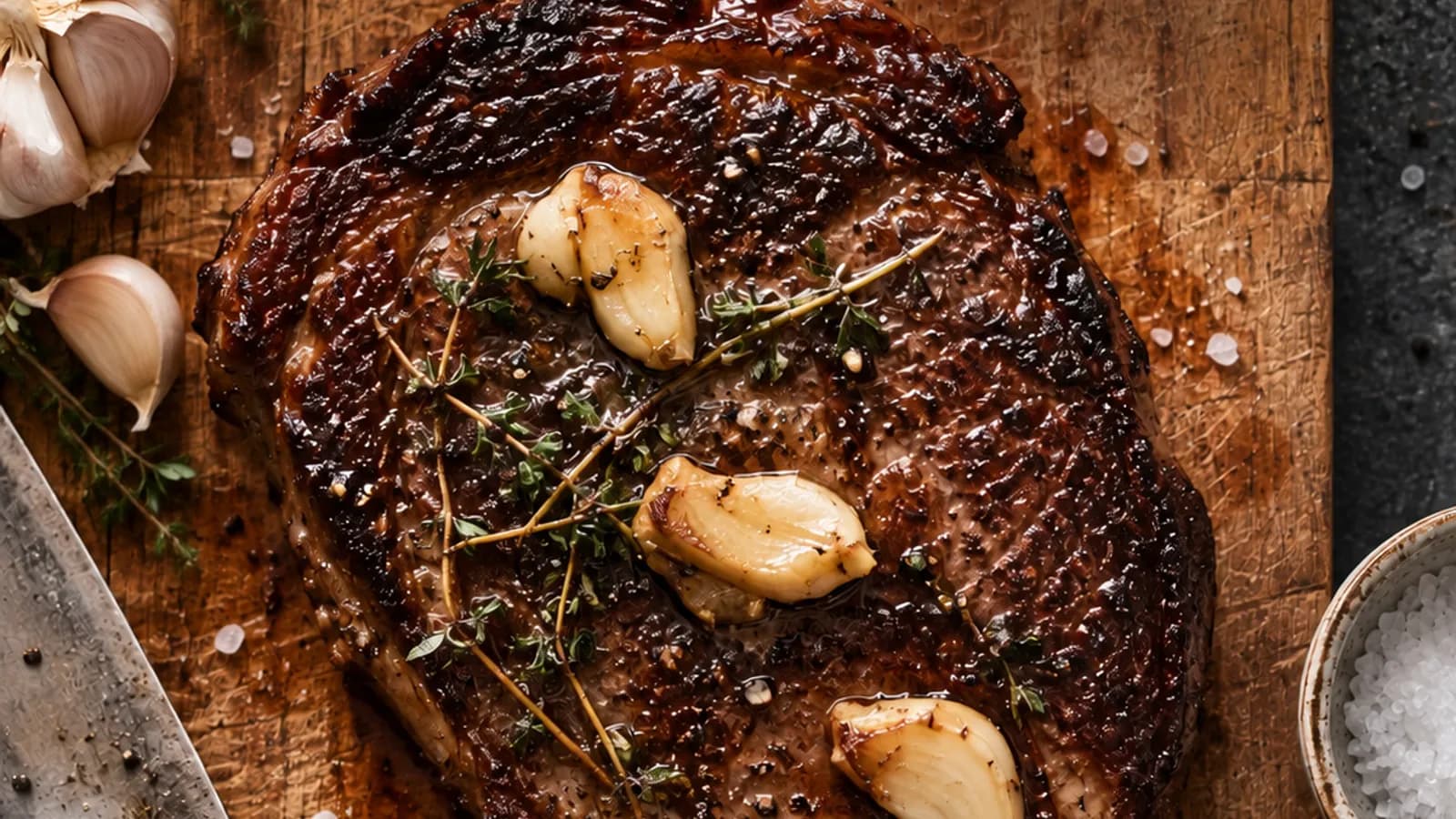
The Maillard Reaction Explained
Why does a seared steak taste different from boiled meat? The answer lies partly in the Maillard reaction, the chemistry responsible for many of the roasted, toasted and savoury flavours created during cooking.
By Lee Mokonyane · 8 September 2026 · 8 min read
The crust of bread, browned meat, roasted coffee and the golden edges of roast potatoes have something in common: heat has created flavour compounds that were not present in the same form before cooking.
One of the main processes responsible is the Maillard reaction.
Understanding it explains several familiar cooking instructions: dry meat before searing, avoid crowding the pan, brown meat before adding stock and give roast vegetables enough space.
What Is the Maillard Reaction?
The Maillard reaction describes a complex series of reactions involving amino compounds, including amino acids from proteins, and reducing sugars.
French chemist Louis-Camille Maillard first described the reaction between amino acids and sugars in 1912.
For cooks, its importance is flavour.
As the reactions progress, they generate numerous aroma, flavour and colour compounds. Depending on the food and cooking conditions, these can produce roasted, toasted, nutty, savoury, malty, earthy and slightly bitter characteristics.
There is no single “Maillard flavour.”
Bread crust does not taste like grilled beef, and grilled beef does not taste like roasted coffee. Different ingredients contain different sugars, amino compounds and other flavour precursors, so heating them produces different results.
Browning Needs the Right Conditions
Maillard reactions can occur at relatively low temperatures, but they become much faster as temperature rises.
There is therefore no single temperature at which the reaction suddenly switches on.
For everyday cooking, the important point is that rapid, visible browning generally requires a sufficiently hot surface with limited surface moisture.
That second condition explains many failed attempts at browning.
Why Water Gets in the Way
A wet surface has to lose much of its water before its temperature can rise far enough for rapid browning.
Water absorbs substantial energy as it heats and evaporates. While a food surface remains very wet, its temperature is constrained and the food is more likely to steam or simmer than develop a strong crust.
This is why drying meat before searing helps.
It is also why mushrooms can sit in a pan looking pale while surrounded by liquid. Browning becomes easier once enough of that moisture has evaporated.
The food does not need to be completely dry internally. What matters is creating suitable conditions at its surface.
Why Crowding the Pan Reduces Browning
Put too much food into a pan and two things happen at once.
The food cools the cooking surface, and several pieces release moisture into a confined space.
That moisture takes time to evaporate.
Instead of rapidly developing browned surfaces, meat, mushrooms or vegetables can begin cooking in their own liquid.
Use a sufficiently large pan or cook in batches when strong browning matters.
The same principle applies in the oven. Vegetables packed tightly onto a tray trap more moisture around one another than vegetables given space for steam to escape.
Give Food Time Against the Pan
Good contact with a hot surface helps food brown.
Constantly moving or turning an ingredient can interrupt that contact before a crust develops.
A steak, piece of chicken or mushroom does not need to remain completely untouched throughout cooking. It simply needs enough uninterrupted contact to brown before being moved.
Meat may also release more readily from a suitable pan once its surface has developed a crust.
Where Maillard Browning Appears in Cooking
Searing Meat
High surface heat can create a deeply browned exterior while the interior cooks to a different degree.
This is why seared steak develops flavours that meat cooked entirely in water does not.
The same applies to chicken, pork and lamb.
Mince shows the effect particularly clearly. Add too much to a small pan and it can release enough liquid to simmer rather than brown. Cooking manageable quantities gives more meat direct contact with the pan and allows moisture to escape.
That browning can make a noticeable difference to meat sauces, chilli and cottage pie.
Roasting
Roasting surrounds food with hot, relatively dry air.
Potatoes, cauliflower, pumpkin, carrots, onions and many other vegetables become more intensely flavoured where their surfaces brown.
Spread them across the tray rather than piling them together when browning is the goal.
Grilling and Braaiing
Grilling and braaiing expose food to intense heat and can create strong Maillard browning on meat, fish, bread and vegetables.
Direct flame can also produce charring.
Charring and Maillard browning are different processes, although both may occur on the same piece of food. Some char can contribute desirable flavour; excessive charring produces harsh, burnt flavours.
Baking
Bread provides an especially clear example of surface conditions.
Its moist interior becomes the crumb. Its exposed surface loses considerably more moisture, becomes hotter and develops a browned, aromatic crust.
Maillard chemistry also contributes to the colour and flavour of biscuits, pastries and the surfaces of many cakes.
Frying
Hot oil transfers heat efficiently to food.
As moisture leaves the surface, fried chicken, fritters, doughnuts and other fried foods can develop golden-brown crusts.
Dehydration, starch changes and other reactions are happening too. Maillard chemistry is one contributor to the finished colour and flavour.
Why Brown Meat Before Adding Liquid?
A stew or braise eventually becomes a wet cooking environment.
Once meat is surrounded by water, stock or wine, its surface cannot reach the same temperatures as easily as it can in a hot pan before the liquid is added.
Browning first develops flavours that will be difficult to create after the pot has been filled with liquid.
The same logic explains why cooks may roast bones before making a dark stock, brown chicken before braising it or cook tomato paste in fat before adding liquid.
Cooking order changes which reactions are possible.
Keep the Brown Bits
After meat or vegetables have browned, deposits may remain attached to the pan.
These browned bits are commonly called fond.
If they are deeply browned rather than burnt, they contain useful flavour.
Adding wine, stock, water or another liquid and scraping the pan dissolves much of that material into the liquid. This is deglazing.
The resulting liquid can become the beginning of a pan sauce, gravy, stew or braising liquid.
Maillard Reaction and Caramelisation Are Different
The terms are often used interchangeably, but they describe different chemistry.
Maillard reactions involve amino compounds and reducing sugars.
Caramelisation involves the thermal breakdown and transformation of sugars and does not require amino acids or proteins.
Heat sugar sufficiently and it begins developing new colours, aromas and flavours. Sweetness becomes increasingly complex, producing caramel, toasted and eventually bitter characteristics.
Real foods are more complicated because several reactions can happen at once.
An onion contains water, sugars, amino acids and many other compounds. As it cooks and loses moisture, both Maillard chemistry and sugar transformations can contribute to its final flavour and colour.
Calling onions “caramelised” is useful culinary language. Chemically, their browning is more complicated than pure sugar caramelisation.
pH Affects Browning
Maillard reactions generally proceed more readily as conditions become less acidic and more alkaline.
Bakers sometimes take advantage of this with bicarbonate of soda. Raising the pH can encourage deeper browning alongside bicarbonate’s role as a raising agent.
The effect is useful but easy to overdo. Excess bicarbonate can create unpleasant alkaline flavours and alter texture.
Changing pH should therefore be part of a recipe or deliberate technique, not a reason to casually add bicarbonate to anything that looks pale.
What Oil Actually Does
Oil does not cause the Maillard reaction.
It helps transfer heat.
Food and cookware are not perfectly flat. A thin film of oil fills some of the small gaps between them, improving thermal contact and helping the surface heat more evenly.
For searing, you generally need enough oil to assist that contact rather than a deep pool.
Browning Has a Limit
More colour does not always mean more flavour.
As cooking continues, pleasant roasted and toasted flavours can give way to excessive bitterness and eventually the acrid taste of burning.
A deeply browned onion and a carbonised onion are chemically and sensorially different.
Control the heat according to the food. High heat is useful for establishing rapid browning, but it does not mean leaving the stove at maximum regardless of what happens next.
When Food Will Not Brown, Check the Conditions
Most everyday browning problems can be traced back to a few things.
Food is wet: Dry the surface or allow moisture time to evaporate.
The pan is crowded: Use more space or cook in batches.
The surface is not hot enough: Give the pan or oven enough time to heat and recover after food is added.
The food keeps moving: Allow sufficient contact time before turning or stirring.
Liquid was added too early: Brown first when the recipe needs both browned flavour and wet cooking.
The food is burning before it browns properly: Reduce the heat and consider whether sugars, marinades or small particles on the surface are scorching.
The Maillard reaction is complex chemistry, but using it in the kitchen does not require memorising the reaction pathway.
Give food enough heat, control surface moisture, leave room for steam to escape and allow the surface time to brown.
Once those conditions make sense, “cook until golden brown” becomes useful information rather than just a colour instruction.