Hiring a Food Stylist: What Brands and Restaurants Should Know in 2026
What food stylists do, when to hire one and how to plan food photography that represents your product accurately and works across different platforms.
By Lee Mokonyane · 16 October 2026 · 11 min read
Food photography has changed considerably over the past few years. Restaurants need images for delivery platforms, websites and social media. Food brands produce content for packaging, advertising, online retail and short-form video. With AI-generated imagery becoming increasingly accessible, businesses also have more ways to produce food visuals.
But an attractive image still needs to communicate something useful about the food being sold. Customers should be able to recognise the product, understand what makes it appealing and form realistic expectations about what they'll receive.
A professional food stylist understands how ingredients behave, how food responds to light and time, and how to prepare dishes so their important qualities remain visible on camera. Whether you're launching a product, refreshing a restaurant menu or planning a campaign, understanding what a stylist contributes can help you make better creative and commercial decisions.
What Does a Food Stylist Actually Do?
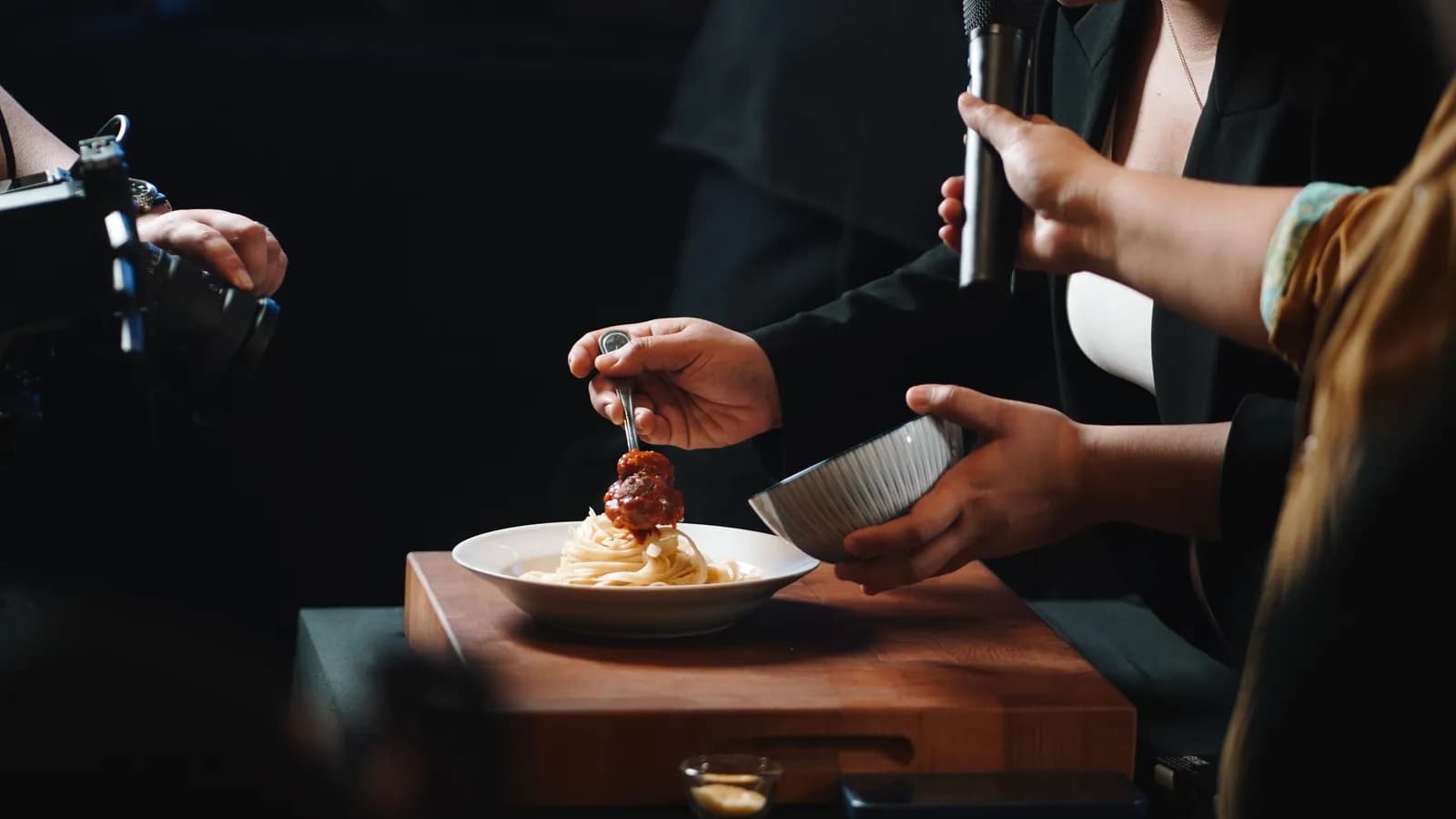
A food stylist prepares, arranges and maintains food for photography, video and advertising. Their work combines culinary knowledge, visual presentation and practical production planning.
Depending on the project, this may involve recipe development, ingredient selection, food preparation, plating, texture adjustments and maintaining consistency between shots.
A stylist might arrange the layers of a burger so its ingredients remain visible, adjust a sauce so it coats food attractively or prepare several versions of a dish to capture it at the right moment.
Good styling also requires restraint. A little irregularity can make food look natural and freshly prepared, while excessive arrangement may make it appear artificial.
Food stylists typically collaborate with photographers, creative directors, videographers and brand teams. On smaller productions, one professional may provide several services, so it's important to establish exactly what's included in the quotation.
Why Food Styling Still Matters in the Age of AI
AI image-generation tools can create convincing food visuals and are useful for mood boards, concept development and exploring creative directions. However, generated images can introduce details that don't accurately reflect the product.
A photograph may show ingredients that aren't included, an unrealistic texture, an incorrect portion size or packaging that differs from what's being sold.
These inaccuracies matter when customers rely on images to make purchasing decisions.
For example, a food manufacturer launching a sauce may need imagery that accurately represents its colour, consistency and appearance when poured. A restaurant may need delivery-platform photographs that reflect its actual portions and presentation.
Photographing the real product provides a visual reference that can be checked against what customers will receive. A food stylist helps present that product attractively while preserving its defining characteristics.
Brands using AI-generated or digitally altered food imagery should establish clear standards for accuracy, particularly when images communicate factual product characteristics.
When Should You Hire a Food Stylist?
Not every food photograph requires professional styling. A small café may produce suitable daily social media content using a smartphone and natural light.
Professional styling becomes more valuable when images need to fulfil a specific commercial purpose, maintain consistency across multiple products or support a larger production investment.
Product Packaging and Advertising
Packaging photography needs to communicate a product's ingredients, texture, serving suggestions and overall appeal within a limited space.
A food stylist may prepare the product according to its intended use, select suitable serving vessels and arrange components so the most important characteristics remain visible.
For example, photographing a frozen ready meal may involve preparing it according to the cooking instructions and presenting the finished dish in a way that accurately reflects the product.
Advertising campaigns may allow greater creative freedom, but imagery should still comply with applicable advertising requirements and accurately represent product characteristics and claims.
Restaurant Menus and Delivery Platforms
Restaurant photography helps customers understand what they're ordering. Images should communicate the main ingredients, portion size and presentation of each dish.
A stylist can establish a consistent approach to plating, garnishing and portioning across a menu.
Photographing dishes using the restaurant's standard recipes and portions is particularly important. Customers should receive food that reasonably matches what they saw when ordering.
Recipe Development and Editorial Content
Cookbooks, recipe websites and food publications use photographs to show readers what a finished recipe should look like.
A food stylist may work with a recipe developer to ensure the image reflects the actual ingredients, preparation method and expected result.
This is particularly useful for baked goods, sauces and dishes where texture indicates whether the recipe has been prepared correctly.
For instructional content, the photograph should help readers recognise the intended result and understand the preparation.
Social Media and Video Production
Short-form video introduces additional styling requirements. Food may need to withstand repeated takes, close-up filming, movement and delays between preparation and recording.
A cheese pull, sauce pour or chocolate drizzle may require several attempts to capture the intended movement and texture.
Stylists plan the preparation sequence, identify which components deteriorate quickly and ensure sufficient food is available for repeated takes.
What Makes Food Look Good on Camera?
Food styling relies on understanding how ingredients change during preparation and photography.
- Colour and contrast: Different colours help distinguish ingredients and make a dish easier to understand visually. A brown stew, for example, may benefit from showing the vegetables or herbs already included in the recipe.
- Texture: Crisp surfaces, glossy sauces, soft interiors and visible layers communicate the eating qualities of a dish.
- Moisture: Some foods dry out quickly, while others release liquid as they stand. Preparation and timing help preserve their intended appearance.
- Temperature: Ice cream melts, cheese firms as it cools and freshly cooked vegetables may lose their colour. These changes influence the shooting schedule.
- Composition: The placement of ingredients determines what viewers notice first. In commercial photography, the product should remain the central subject.
- Lighting: Lighting affects the appearance of colour, texture and moisture. Stylists work with photographers to ensure these characteristics are visible.
These factors explain why professional food styling involves more than arranging ingredients on a plate. Preparation, testing and adjustments are often necessary before the final image is captured.
How to Choose the Right Food Stylist
A strong portfolio is a useful starting point, but the most suitable stylist is someone whose experience matches your project's requirements.
A stylist specialising in restaurant photography may be particularly skilled at working quickly with freshly prepared dishes. Someone experienced in packaging photography may be more familiar with product consistency, detailed briefs and close-up commercial imagery.
When evaluating potential food stylists, consider:
- Relevant experience: Have they worked with similar products, cuisines or production formats?
- Food knowledge: Can they prepare and handle the ingredients correctly, including products with specific technical requirements?
- Visual approach: Does their portfolio reflect a style suitable for your brand and intended audience?
- Production experience: Can they collaborate effectively with photographers, agencies, videographers and other creative professionals?
- Practical capabilities: Can they manage ingredient sourcing, preparation, transport and food handling on set?
- Scope and fees: What services are included, and which expenses will be charged separately?
You can find food stylists through professional portfolios, creative agencies, photographers, industry recommendations and online searches.
Ask to see examples of work similar to your project. If you're commissioning video content, review motion work alongside still photography.
It's also worth discussing how the stylist approaches unexpected challenges. Ingredients don't always behave as planned, and the ability to adapt during production is an important professional skill.
How to Brief a Food Stylist Properly
A clear brief helps the stylist understand your objectives, estimate the resources required and identify potential challenges before production begins.
Include the following information:
- Project objective: Explain what the images need to communicate and how they will support your business or campaign.
- Products or dishes: Provide recipes, ingredient lists, product specifications and any variations that need to be photographed.
- Intended use: Specify whether the content is for packaging, advertising, menus, e-commerce, social media or video.
- Deliverables: Confirm the number of images, required formats, orientations and specific shots.
- Visual direction: Share brand guidelines, reference images, preferred styling and examples of the overall look you're trying to achieve.
- Accuracy requirements: Identify approved ingredients, portion sizes, preparation instructions and product claims that must be represented correctly.
- Production details: Provide the proposed location, dates, schedule and available kitchen or studio facilities.
- Budget: Share the available production budget and clarify which services you expect the stylist to provide.
Reference images are particularly useful when they communicate specific preferences for lighting, composition, plating or texture.
However, allow room for professional recommendations. A stylist may suggest a different camera angle, preparation method or arrangement if it communicates the product more effectively.
What Should Be Included in a Food Styling Quotation?
Food styling fees vary according to the complexity of the project, preparation requirements, production duration and specialist expertise involved.
A restaurant menu shoot may require several hours on location, while a packaging campaign involving multiple products could require recipe testing, preparation days, assistants and specialist equipment.
Before accepting a quotation, establish whether it includes:
- Creative planning and pre-production meetings
- Recipe development or testing, where required
- Ingredient purchasing and food preparation
- Styling time on set
- Props, surfaces and specialist equipment
- Assistants and additional kitchen staff
- Transport, travel and accommodation
- Overtime, additional shoot days and reshoots
Photography, videography, editing and image usage rights may be quoted separately, depending on the production team.
Also clarify who is responsible for purchasing ingredients, supplying product samples and managing unused food after the shoot.
A detailed quotation helps everyone understand the work involved and reduces unexpected costs.
Preparing for a Successful Food Shoot
Good preparation helps manage production time, minimise waste and make the best use of the available budget.
Start by finalising the shot list and confirming which products or dishes need to be photographed. Identify ingredients that require advance preparation, specialist equipment or careful timing.
For restaurant photography, schedule dishes according to how quickly their appearance changes. Frozen desserts, fried foods and delicate garnishes may need to be photographed immediately after preparation.
For product photography, ensure approved packaging, product samples and specifications are available before the shoot.
Agree on who will approve styling decisions and final images. Delays in feedback can be particularly costly when food has a limited window in which it looks its best.
Allow some flexibility for adjustments. A dish may look different under the selected lighting, or a composition may need to change once it's viewed through the camera.
Food Safety and Responsible Styling
Food used for photography should be handled according to appropriate hygiene and temperature-control practices, particularly if it may be eaten afterwards.
Some productions use techniques or materials intended solely for visual presentation. Food treated with non-food-safe substances or held outside safe temperature conditions should never be served for consumption.
Commercial productions should distinguish clearly between food prepared for photography and food intended for tasting or serving.
Responsible styling also includes accurate product representation. Ingredients, portion sizes, textures and serving suggestions should be consistent with what customers can reasonably expect.
Significant digital alterations should be reviewed to ensure they don't misrepresent the product or create misleading expectations.
Is Professional Food Styling Worth the Investment?
The value of professional styling depends on what the images need to achieve.
For a restaurant, well-planned photography can create a consistent presentation across menus, websites and ordering platforms. For a food manufacturer, accurate product imagery can support packaging, advertising and retailer listings. For a recipe publisher, clear photographs help readers understand the intended result.
Professional styling is particularly useful when products are difficult to photograph, consistency is important or the cost of reshooting would be significant.
Before investing, consider:
- Where the images will be used and how long they need to remain relevant
- Whether the food requires specialist preparation or handling
- How many products or dishes need to be photographed
- Whether the content will be adapted for different platforms
- Whether the production requires a stylist, photographer, videographer or a combination of services
- What level of accuracy and consistency the project requires
A carefully planned shoot with a clear purpose can provide more value than producing a large collection of images without a defined use.
Final Thoughts
Food styling combines culinary knowledge, visual communication and practical production skills. Good results depend on understanding the product, the audience and the purpose of the image.
As brands produce content for more platforms and experiment with AI-generated visuals, accuracy and consistency remain important. Customers should be able to recognise the food they're being shown and understand what makes it appealing.
If you're planning a food photography or video project, involve your stylist early, communicate your requirements clearly and allow sufficient time for preparation.
At Good Food Studio, our experience across recipe development, culinary production and food styling helps us approach food imagery with an understanding of both how food should look and how it behaves.