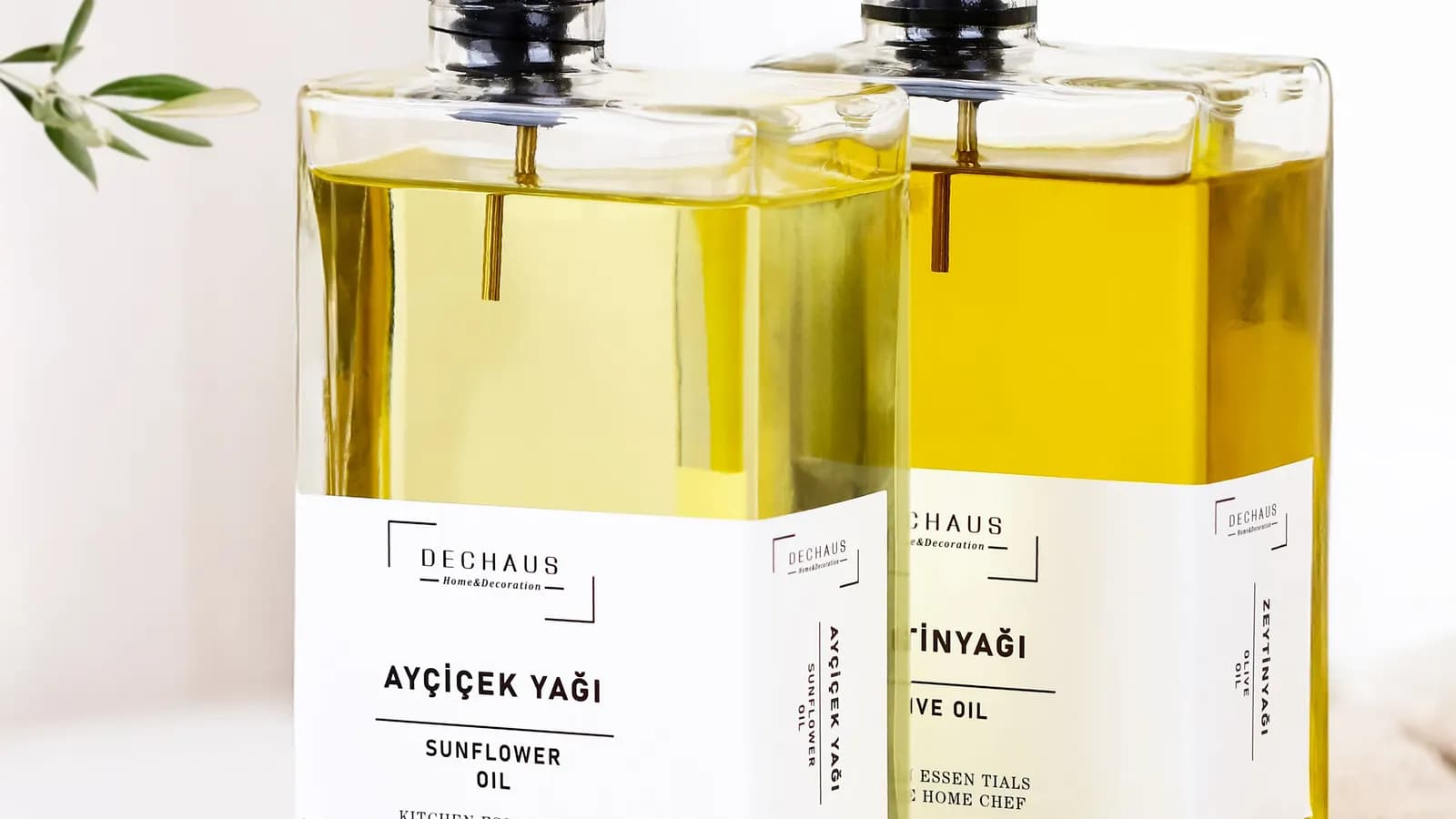
A Guide to Cooking Oils & Fats
A practical guide to choosing oils and fats by heat, flavour and function, from everyday oils and olive oil to butter, ghee and finishing oils.
By Lee Mokonyane · 24 September 2026 · 8 min read
The best cooking fat depends on three things: how it will be heated, whether you want to taste it and what job it needs to do.
A neutral oil can fry chicken without competing with its seasoning. Extra-virgin olive oil can become part of the flavour of roasted vegetables or a dressing. Butter can brown, baste and create structure in baking. Toasted sesame oil may need only a teaspoon to change an entire dish.
Understanding those differences is more useful than choosing one oil for everything.
What Fat Does in Cooking
Oil fills tiny gaps between food and a hot cooking surface, improving heat transfer and helping food brown evenly.
It also dissolves and carries many flavour compounds. Cooking garlic, spices and aromatics in fat can release compounds differently from cooking them in water.
In baking, fat affects tenderness, aeration, flakiness, moisture and how a product feels once cool.
The type of fat matters because oils, butter and solid fats have different flavours and physical properties.
Smoke Point Is Useful, but Limited
Smoke point is the temperature at which a fat begins producing visible smoke.
It is not a fixed number for every bottle of a particular oil. Refinement, free fatty acids, age, quality and previous heating can change it.
Smoke point also tells you only part of what happens when oil is heated. An oil’s fatty-acid composition, antioxidants and oxidative stability influence how it performs during cooking.
For the home cook, the practical rule is simpler: do not routinely heat oil until it is smoking.
Persistent smoke tells you the fat is hotter than necessary for the job and its quality is deteriorating.
Refined and Unrefined Oils Behave Differently
Refining removes many compounds responsible for an oil’s colour, aroma and flavour and generally produces a milder oil with more consistent cooking properties.
Unrefined oils retain more characteristics of the ingredient they came from.
This distinction matters when buying avocado, coconut, sesame and olive oils. Two bottles made from the same source ingredient may have very different flavours and uses.
Read the label rather than relying on the oil name alone.
Extra-Virgin Olive Oil
Extra-virgin olive oil is produced mechanically without the refining used for refined olive oil.
Its flavour can range from soft and fruity to grassy, bitter and peppery.
Use it for:
- sautéing
- roasting
- sauces
- marinades
- dressings
- dips
- pasta
- beans and lentils
- finishing cooked dishes
Extra-virgin olive oil is suitable for considerably more cooking than the old advice to reserve it exclusively for cold dishes suggests.
A particularly flavourful bottle is often best used where you can taste it. Drizzle it over soup, beans, grilled vegetables, bread or pasta after cooking rather than using a large quantity for deep-frying.
Refined Olive Oil
Products labelled simply olive oil are generally based on refined olive oil, often blended with some virgin olive oil.
They are milder than extra virgin and useful when you want olive oil without a pronounced flavour.
Use refined olive oil for sautéing, roasting, pan-frying and general cooking.
Sunflower Oil
Refined sunflower oil has a mild flavour and is widely useful.
It suits:
- frying
- roasting
- sautéing
- general stovetop cooking
- mayonnaise
- marinades
- baking
Its neutrality makes it particularly useful in cakes, muffins and other recipes where liquid oil is needed without adding a distinctive flavour.
Canola Oil
Canola is another mild, versatile oil.
It works well for frying, sautéing, roasting, stir-frying, dressings and baking.
Its neutral flavour makes it useful when the oil has a functional role but should remain largely unnoticed in the finished food.
Avocado Oil
Refined avocado oil is mild and performs well in high-temperature cooking.
It can be useful for searing, roasting, grilling and stir-frying.
Unrefined avocado oil has more flavour and may behave differently under heat. Check which type you are buying.
Grapeseed Oil
Grapeseed oil has a relatively light flavour.
It works well in sautéing, pan-frying, marinades, mayonnaise and vinaigrettes where a strongly flavoured oil would compete with the other ingredients.
Peanut Oil
Refined peanut oil is useful for frying and wok cooking because of its mild flavour and suitability for sustained high temperatures.
Less-refined versions can retain more peanut character.
Peanut is a major allergen, so its use needs particular consideration when cooking for other people.
Rice Bran Oil
Rice bran oil has a mild flavour and works well for frying, stir-frying, roasting and general cooking.
It is useful when you want browning and crispness without adding much flavour from the oil itself.
Corn Oil
Refined corn oil is mild and commonly used for frying, roasting and baking.
Like sunflower and canola, it is useful when the fat needs to perform a cooking function without dominating the dish.
Coconut Oil
The type matters considerably.
Virgin Coconut Oil
Virgin coconut oil retains a recognisable coconut aroma and flavour.
It suits curries, coconut-based dishes, granola and baked goods where that flavour belongs.
Its high proportion of saturated fat also means it becomes solid or semi-solid at relatively warm room temperatures. That physical behaviour can affect the texture of baked goods and confectionery.
Refined Coconut Oil
Refining removes much of the coconut aroma.
Use it where coconut oil’s physical properties are useful but a strong coconut flavour is not.
Sesame Oil
Toasted and untoasted sesame oils serve different purposes.
Toasted Sesame Oil
Toasted sesame oil is strongly aromatic and usually used in small quantities.
Add it to noodles, fried rice, soups, dumpling sauces, marinades and dressings, often near the end of cooking.
Treat it primarily as a flavouring ingredient rather than your default frying oil.
Untoasted Sesame Oil
Untoasted sesame oil is paler and milder.
It can be used for cooking and stir-frying where a subtle sesame character suits the dish.
Delicate Nut and Seed Oils
Flaxseed, walnut, pumpkin seed, hazelnut and other speciality oils are often bought for flavour rather than cooking performance.
Use them in:
- dressings
- dips
- cold sauces
- finished soups
- cooked vegetables
- grains
Walnut oil works naturally with beetroot and leafy salads. Pumpkin seed oil can add depth to soups and vegetables. Hazelnut oil suits mushrooms, pears and roasted vegetables.
Expensive aromatic oil provides little advantage if its flavour disappears during cooking.
Butter
Butter contains fat, water and milk solids.
Those milk solids give butter much of its flavour and allow it to brown, but they can also burn under intense heat.
Butter works particularly well for eggs, pancakes, mushrooms, vegetables, basting, sauces and finishing.
Its role becomes more complicated in baking.
Soft butter can trap air when creamed with sugar. Cold butter can create flaky pastry. Melted butter produces a different texture.
Replacing butter with liquid oil can therefore change structure as well as flavour.
Brown Butter
Heat butter beyond melting and its water begins evaporating. The milk solids eventually brown and develop toasted, nutty aromas.
This is brown butter, or beurre noisette.
It works well with pasta, gnocchi, sage, pumpkin, cauliflower, fish, cakes and biscuits.
Once the milk solids begin colouring, watch closely. They can move from browned to burnt quickly.
Ghee and Clarified Butter
Clarified butter has had most of its water and milk solids removed.
Ghee uses a related process but is cooked to develop a deeper flavour before the solids are separated.
Removing those milk solids makes both better suited to higher-temperature cooking than whole butter.
Ghee is particularly useful for frying spices, sautéing, searing, roasting, curries and flatbreads.
Animal Fats
Rendered animal fats contribute flavour as well as cooking performance.
Beef tallow works well with beef, roast potatoes, root vegetables, frying and searing.
Duck fat is particularly suited to potatoes, root vegetables, poultry and confit.
These fats make most sense where their savoury character improves the finished dish.
You Probably Need Fewer Oils Than You Think
A useful home kitchen can cover most cooking with three or four fats:
- A neutral oil such as sunflower or canola for frying, general cooking and oil-based baking.
- Extra-virgin olive oil for everyday cooking, dressings and finishing.
- Butter for baking, sautéing, sauces and flavour.
- One specialist fat suited to the food you cook regularly, such as ghee, toasted sesame oil, coconut oil or refined avocado oil.
Buy additional oils when you know what you will do with them.
Before choosing a fat, ask:
How am I cooking it?
Do I want to taste the fat?
Does the recipe need any particular physical property from it?
Those questions will usually get you further than memorising a chart of smoke points.