Egg Freshness, Storage and Food Safety
How eggs change as they age, what freshness tests can actually tell you and how to store and handle eggs safely.
By Lee Mokonyane · 11 September 2026 · 4 min read
Freshness and safety are different questions.
An egg can change noticeably in quality as it ages without those changes telling you whether harmful bacteria are present. That distinction matters when using appearance, dates or the popular float test to judge an egg.
What Happens as an Egg Ages?
Eggshells are porous.
During storage, carbon dioxide and moisture gradually leave the egg. Its air cell grows, the white becomes thinner and the yolk membrane weakens.
Crack a very fresh egg into a pan and the thick white usually stays relatively close to a high, rounded yolk. An older egg tends to spread further.
These changes affect cooking quality, particularly for poached and fried eggs.
What the Float Test Actually Tells You
An older egg has a larger air cell and is therefore more buoyant.
That is why an egg may gradually move from lying flat in water to standing upright and eventually floating.
The test can indicate age-related changes in the air cell.
It cannot detect Salmonella or establish that an egg is safe to eat.
Do not use floating as a microbiological safety test.
Why Older Boiled Eggs Can Peel More Easily
Fresh egg white tends to adhere more strongly to the membrane beneath the shell.
As an egg ages, chemical changes inside it alter that relationship, which can make a cooked egg easier to peel.
An egg being slightly older can therefore be useful when preparing hard-boiled eggs where clean peeling matters.
Raw Eggs Can Carry Salmonella
Clean appearance does not guarantee safety. Fresh, intact eggs can contain Salmonella. (U.S. Food and Drug Administration)
Raw egg can also contaminate hands, utensils and work surfaces.
Wash hands and equipment after handling raw egg and keep it away from ready-to-eat foods.
Raw and Lightly Cooked Egg Dishes Need More Care
Foods such as homemade mayonnaise, some dressings, mousses and other preparations may contain egg that receives little or no cooking.
Pasteurised shell eggs or pasteurised egg products reduce the risk in preparations that will remain raw or undercooked. (U.S. Food and Drug Administration)
This is particularly relevant when preparing food for people at greater risk of severe foodborne illness.
Local food-safety guidance should determine the appropriate cooking and handling standard.
Should Eggs Be Washed?
There is no useful universal rule telling consumers everywhere to wash or never wash eggs.
Commercial egg treatment differs between countries. Some systems wash eggs before sale and rely on refrigeration; others preserve more of the shell’s natural cuticle.
Follow the handling and storage instructions supplied for eggs in your market.
Washing eggs automatically before storage can be counterproductive where the protective cuticle remains intact.
Where to Store Eggs
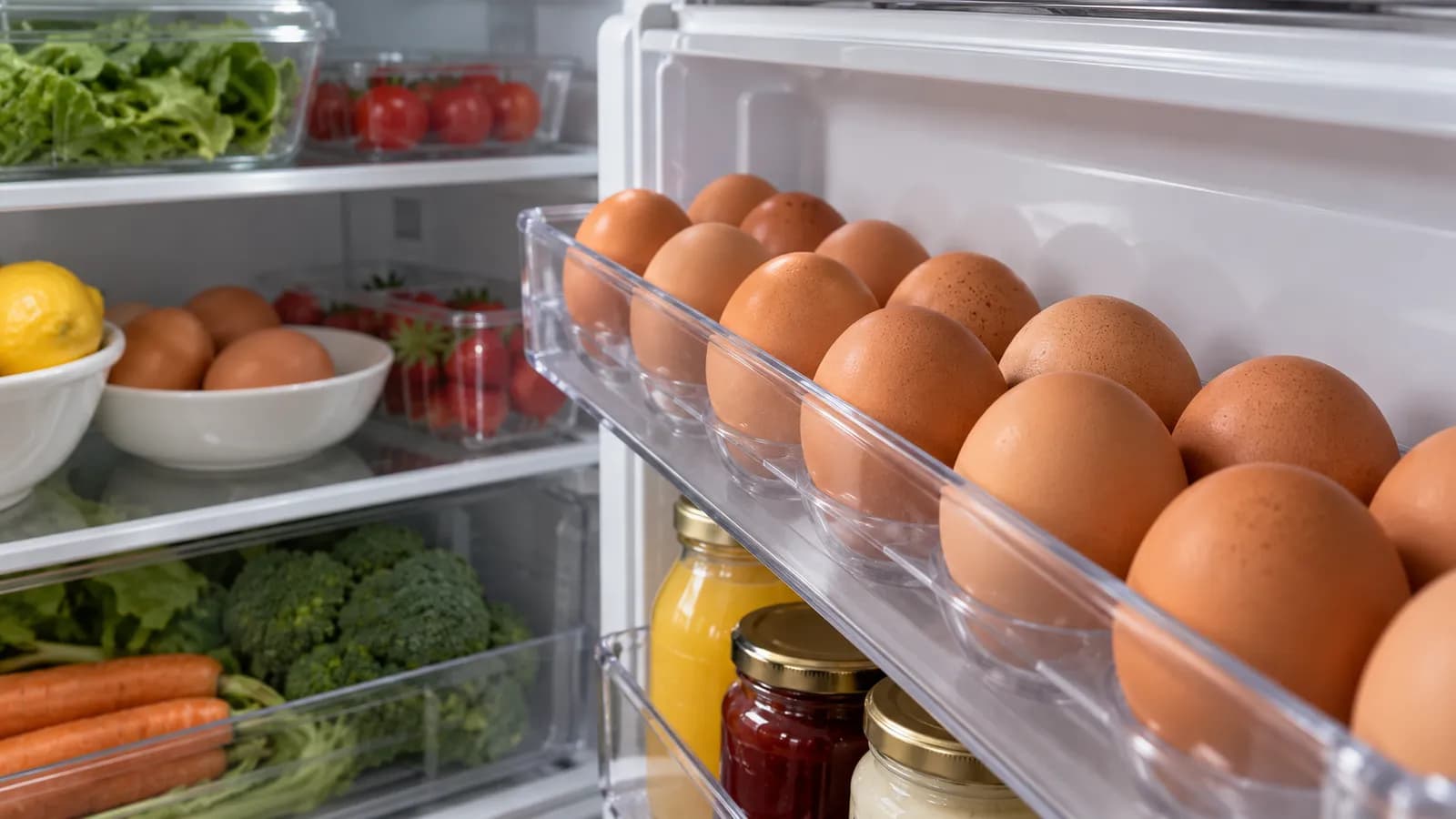
Where eggs are sold and managed as refrigerated food, keep them consistently cold and follow the storage instructions on the carton.
The original carton protects eggs from damage and reduces moisture loss and odour absorption.
A refrigerator shelf generally provides a more stable temperature than the door.
Avoid cracked or badly damaged eggs.
Why Temperature Fluctuation Matters
Repeated temperature changes can shorten quality and complicate safe storage.
Consistency matters.
Once eggs are being maintained under refrigeration, avoid leaving them at room temperature unnecessarily and then repeatedly returning them to the refrigerator.
Exact storage requirements differ between egg-production systems, so local guidance takes priority over advice written for another country.
Can Raw Eggs Be Frozen?
Do not freeze raw whole eggs in their shells. The liquid expands as it freezes and can crack the shell. (U.S. Food and Drug Administration)
Crack them first.
Whole eggs can be lightly beaten before freezing, and whites freeze well separately.
Yolks need more preparation because freezing can make them thick and gelatinous. Salt or sugar can be mixed into yolks before freezing depending on their eventual use.
Label frozen yolks clearly so you know whether they were prepared for sweet or savoury cooking.
Store Cracked Eggs Properly
Once an egg has been cracked, do not return it to its shell for storage.
Transfer unused whites or yolks to clean, covered containers and refrigerate them promptly according to local food-safety guidance.
Cooked egg dishes also need prompt refrigeration rather than prolonged storage at room temperature. (Ask USDA)
Freshness Cannot Prove Safety
Smell, appearance, shell condition, dates and the float test can all provide useful information about quality.
None can establish that a raw egg is free from pathogenic bacteria.
Use freshness indicators to judge quality and proper handling, pasteurisation and appropriate cooking to manage food safety.
Keeping those two questions separate prevents a surprisingly common kitchen mistake.