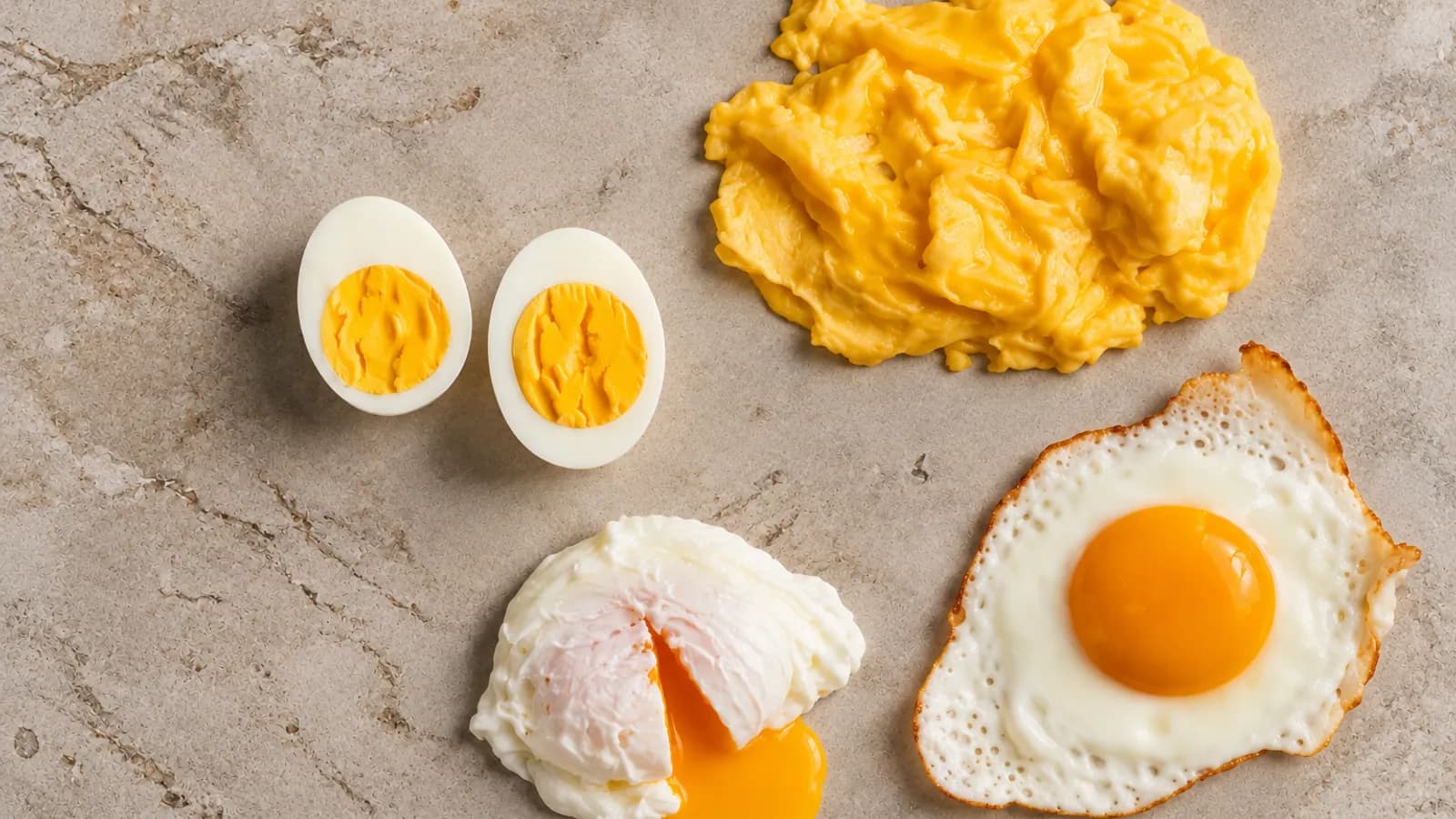
How to Cook Eggs Properly: Boiled, Poached, Scrambled and Fried
A guide to using heat, timing and technique to control the texture of boiled, poached, scrambled and fried eggs.
By Lee Mokonyane · 3 September 2026 · 4 min read
Most differences in cooked-egg texture come from the same process: proteins coagulate as they heat.
Control how quickly and how far they set and you can control the texture.
Why Eggs Become Rubbery
Heating unfolds egg proteins and allows them to form a network.
Continued heating creates more connections and tightens that network. Eventually the egg becomes firm, then rubbery, and can begin releasing water.
Higher heat is useful when you deliberately want crisp edges or rapid cooking. For tender eggs, control matters more than intensity.
Boiled Eggs
There is no universal cooking time for every boiled egg.
Timing changes with:
- egg size
- starting temperature
- water temperature
- altitude
- cooking method
- desired yolk texture
A soft-boiled egg needs a set white and fluid yolk. A jammy yolk requires further setting. A hard-boiled yolk is fully coagulated.
For repeatable results, keep your egg size and starting method consistent and adjust the time to your preference.
Why Hard-Boiled Yolks Turn Grey-Green
The grey-green layer sometimes found around a hard-boiled yolk forms when sulfur from the white reacts with iron in the yolk.
Prolonged heating encourages it.
The colour is generally harmless. Avoid excessive cooking and cool the eggs promptly when they have reached the required doneness.
Poached Eggs
Poaching needs water hot enough to set the white without violently disturbing it.
A rolling boil can break the loose white apart before it has formed enough structure to hold together.
Fresh eggs are particularly useful for poaching because their thick white remains more compact around the yolk.
A little vinegar can encourage proteins at the surface to coagulate more quickly. Too much can affect flavour.
Scrambled Eggs
Scrambled eggs give you direct control over the size and firmness of the curds.
Higher heat coagulates proteins rapidly and tends to create firmer curds. Gentler heat slows the process and gives you more time to stop at a softer texture.
Stirring also changes the result. Frequent movement generally creates smaller curds; less movement allows larger ones to form.
Remember Residual Heat
Eggs continue cooking after the pan leaves the stove.
A heavy hot pan can carry them considerably further.
Remove scrambled eggs before they look completely finished if you want residual heat to bring them to their final texture.
Fried Eggs
Frying requires control of two parts of the egg that may have different desired endpoints.
The white needs to set. The yolk may remain liquid, become jammy or cook completely.
Moderate heat gives more time to manage the difference.
Covering the pan briefly traps steam and helps cook the upper white without requiring prolonged contact with the hot pan.
Higher heat creates crisp, browned edges. That is a deliberate style rather than a requirement for a properly cooked fried egg.
Does Salting Eggs Before Cooking Make Them Tough?
Salt can affect egg proteins, but the claim that salting before cooking automatically produces tough scrambled eggs is too simple.
Cooking temperature and duration have a much larger practical effect on tenderness.
Season according to the result and method rather than following a blanket prohibition against early salting.
Freshness Changes How Eggs Cook
As eggs age, the thick white becomes thinner and the yolk membrane weakens.
A very fresh egg tends to remain compact when cracked into a pan. An older egg spreads further.
This matters particularly for poaching and neat fried eggs.
Older eggs can have an advantage elsewhere: they are often easier to peel after hard-boiling.
Freshest is therefore not automatically best for every egg preparation.
Control the Endpoint
The useful question in egg cookery is not simply whether the egg is cooked.
Ask how far you want its proteins to set.
A flowing yolk, creamy scramble, jammy boiled egg and firm omelette are different points along the same process.
Control the heat, watch the texture and account for the cooking that continues after the egg leaves the heat.