Which Oil Should You Use for Frying, Roasting, Searing and Baking?
How to choose the right oil or fat for different cooking methods, from frying and roasting to baking and finishing.
By Lee Mokonyane · 26 September 2026 · 5 min read
The cooking method tells you a great deal about the fat you need.
Deep-frying requires enough oil to maintain a controlled high temperature. Searing needs only a thin layer. A salad dressing needs no heat resistance at all. Baking may depend on whether the fat is liquid, soft or solid.
Choose for the job.
Deep-Frying
Deep-frying commonly operates around 175–190°C, depending on the food. (Ask USDA)
Useful oils include:
- sunflower
- canola
- peanut
- corn
- rice bran
- suitable olive oils
The oil needs a mild enough flavour for the food and good performance at sustained frying temperatures.
A thermometer is far more useful than guessing from the appearance of the oil.
Why Fried Food Becomes Greasy
Food cools the oil as soon as it enters.
Add too much at once and the temperature can fall sharply. Browning and crust formation slow, cooking takes longer and the result can become heavier.
Fry in batches and allow the oil to recover between them. Overcrowding can also produce uneven cooking. (FSIS)
Oil that is excessively hot creates a different problem: the exterior may brown before the centre is properly cooked.
Shallow-Frying
Shallow-frying needs enough fat to cook a significant part of the food’s surface without submerging it completely.
Sunflower, canola, peanut and refined olive oil are useful choices.
Use it for:
- schnitzel
- crumbed chicken
- fish cakes
- fritters
- falafel
- potato cakes
- crumbed vegetables
Maintain a steady temperature and turn the food once the first side has developed its crust.
Searing
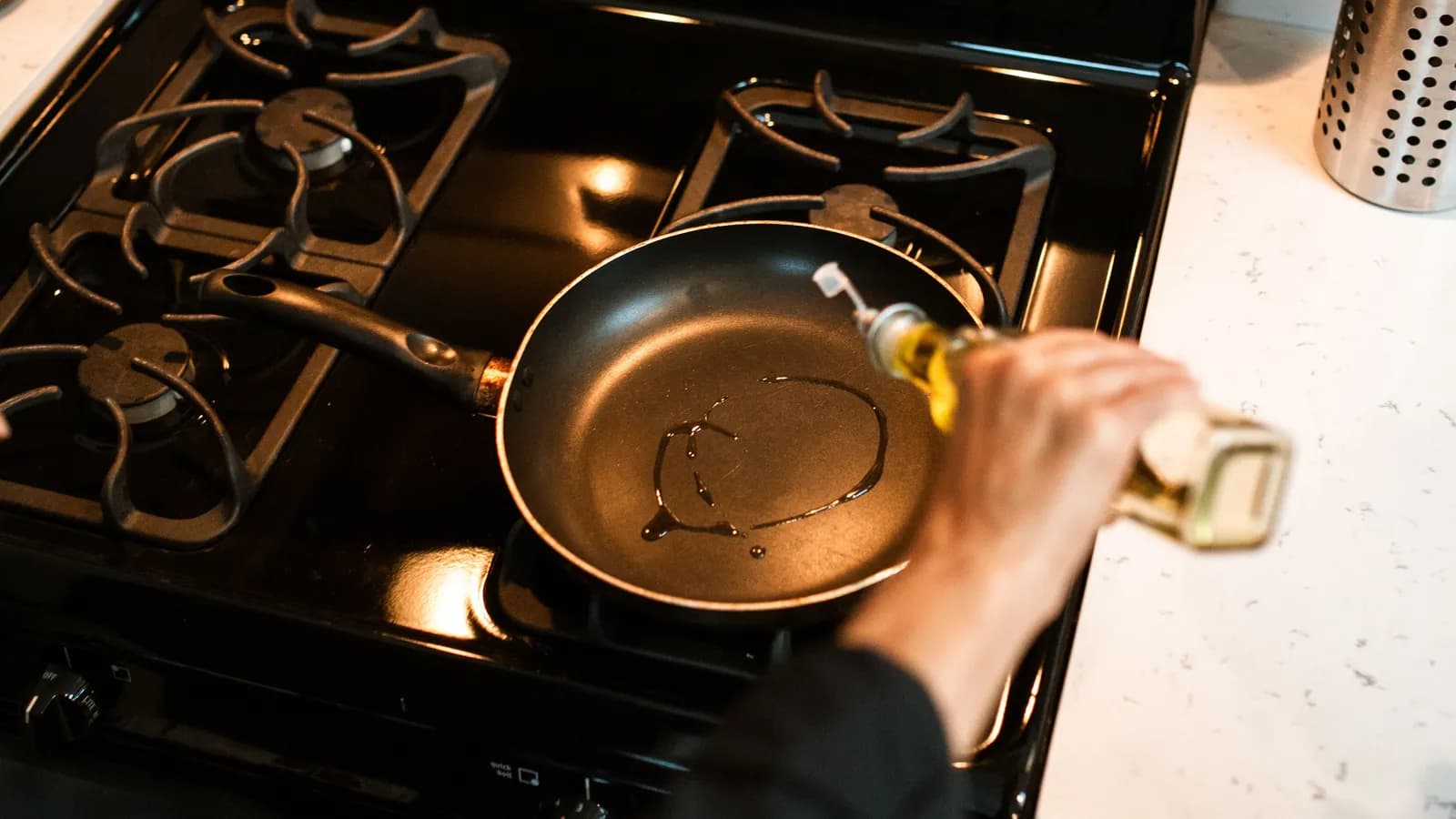
Searing needs a hot pan, a dry food surface and relatively little oil.
Suitable choices include neutral refined oils, refined avocado oil and refined olive oil.
Use only enough to create good contact between the ingredient and pan.
Drying meat, fish or vegetables before searing matters because surface water needs to evaporate before efficient browning can occur.
Sautéing
Sautéing gives you much more flexibility.
Extra-virgin olive oil, refined olive oil, sunflower, canola, avocado oil, butter and ghee can all work depending on the food and temperature.
Choose primarily according to flavour.
Butter suits mushrooms. Olive oil works naturally with tomatoes and courgettes. Ghee can complement spices. A neutral oil makes sense where you do not want the fat to announce itself.
Stir-Frying
Stir-frying combines high heat with fast cooking.
Sunflower, peanut, canola, refined avocado and rice bran oils are practical options.
Prepare everything before heating the wok. Once cooking begins, ingredients move quickly.
Strongly flavoured oils such as toasted sesame oil are usually more useful as seasoning towards the end than as the main frying medium.
Roasting
Sunflower, canola, olive and avocado oils can all be used for roasting.
You need enough fat to coat the surface of the food, not flood the tray.
Browning also depends on moisture escaping. Overcrowded vegetables release steam into a confined space and can soften before developing deeply browned surfaces.
Give them room.
Baking
Oil and butter are not automatically interchangeable in baking.
Liquid oils coat ingredients and remain fluid when cool, making them useful in moist cakes, muffins and quick breads.
Butter can behave very differently depending on its temperature.
Softened butter can trap air during creaming.
Cold butter can create pockets and layers in pastry.
Melted butter behaves differently again.
Coconut oil can firm as it cools, which can also change finished texture.
When a baking recipe specifies a particular form of fat, work out what that fat is doing before substituting it.
Dressings and Finishing
Heat performance is largely irrelevant when the oil is not being heated.
Choose for flavour.
Extra-virgin olive oil can add fruitiness, bitterness or pepperiness. Toasted sesame oil contributes roasted aroma. Walnut, pumpkin seed and hazelnut oils can give dressings, vegetables and grains distinctive flavours.
This is where expensive aromatic oils often make the most sense because very little is needed and their character remains intact.
Why Hot Oil Spits
Most violent spitting comes from water meeting hot fat.
Water turns rapidly to steam and throws droplets of oil from the pan.
Dry wet ingredients before frying or searing and remove surface ice from frozen foods where appropriate.
Never pour water onto burning cooking oil. It can spread the burning fat violently. (FSIS)
Can Frying Oil Be Reused?
Sometimes.
Allow used frying oil to cool, strain out food particles and transfer it to a clean, closed container.
Discard oil when it develops obvious deterioration such as unpleasant odours, excessive foaming or noticeably abnormal smoking behaviour. Oil also retains flavours from food, so frying fish in it may limit what you want to cook next. USDA guidance similarly recommends straining reusable oil and discarding it when its smell or appearance deteriorates. (FSIS)
Do not pour used cooking oil down the sink.
Store Oil Away From Heat and Light
Oxygen, light and heat gradually degrade cooking oils.
Keep bottles tightly closed in a cool, dark place rather than beside the stove or in direct sunlight.
Some speciality nut and seed oils deteriorate relatively quickly once opened and may benefit from refrigeration; follow the manufacturer’s storage instructions.
Buying a huge bottle is economical only if you use it before its quality deteriorates.
Match the Fat to the Job
For deep-frying, choose an oil that performs well under sustained frying temperatures and does not introduce an unwanted flavour.
For searing and stir-frying, choose a fat suited to short, intense heating.
For sautéing and roasting, you have considerably more flexibility and can let flavour guide the choice.
For baking, pay attention to whether the recipe depends on the fat being liquid, soft or solid.
For dressings and finishing, choose almost entirely for flavour.
There is rarely one universally “best” cooking oil.
There is a better oil for what you are making.